Under the guidance of a mysterious man called "The Professor", a group of robbers, Tokyo, Rio, Berlin, Nairobi, Denver, Moscow, Oslo, and Helsinki, invade the Royal Mint of Spain and take hold of 67 hostages as part of their plan to print, and escape with, €2.4 billion. Raquel Murillo, a police investigator is put in charge of the case, unaware that the mastermind is closer than she could ever imagine.
Un enigmático hombre que se presenta como “el profesor” forma un equipo con 8 ladrones con el propósito de dar el mayor golpe de la historia con un atraco a la Fábrica de moneda y timbre. El equipo se instala en la fábrica secuestrando 67 rehenes y comienza a imprimir dinero. Raquel Murillo, la inspectora puesta a cargo del caso, no sabe que el cerebro detrás del atraco está más cerca de lo que se podrá imaginar.
I remember opening the drive one autumn evening, the cool click of the tray releasing like a hinge in an old storybook. My hand hovered over a ridge of fingerprints and tiny scratches, evidence of previous labor. I slid a burned DVD into place — not a pristine pressed disc, but one of those home-recorded movies where the label said “Vacation 2013.” The drive accepted it with a soft motorized hum, and the tray closed as if it were drawing a curtain on a small private theater.
There is, too, a romance to the idea of maintaining older hardware. Firmware is a form of digital conservation. When a newer update restores read compatibility with certain burned discs, it becomes a salvage operation for memory itself: photos that might have been lost to disc rot are given another chance at light. In this sense the DRW-24D5MT is less a plastic box and more an archivist. Its firmware decides, in microseconds, whether a wobble in the pits of a DVD is noise or a human record worth reading. asus drw-24d5mt firmware
Searching online for firmware for that particular ASUS model felt like reading between the lines of a thousand forum posts. Someone who had the same drive reported that after a system update, the drive’s tray would fail to open; another warned of a bricked unit after an interrupted update. There was a certain folklore to these threads: earnest instructions, half-remembered fixes, salvaged BIOS images posted like talismans. You could almost hear the low, collective wail of tens of thousands of optical drives, rendered obscure by the advent of USB flashing and cloud storage, but still living in attics and drawers across the world. I remember opening the drive one autumn evening,
Firmware is easy to overlook. It lives in the liminal space between hardware and human intent, rarely seen until something goes wrong. But when it does, its role becomes obvious and visceral. A firmware update for the DRW-24D5MT is not merely a version number on a download page: it is an intimate rewriting of behavior, a negotiation between silicon design, standards bodies, and the countless ways people use optical media. Each commit, each checksum change, represents the manufacturer's response to new discs, new formats, and the delicate problem of time itself: discs age, lasers drift, and the way systems boot changes. There is, too, a romance to the idea
In the end, the drive closed around the disc as before, and this time the OS read it cleanly — the video appeared, slightly grainy but whole, and the sounds of laughter from a decade ago filled the room. The update wasn’t dramatic: no fireworks, no fanfare — just the hum of a motor and the whispered certainty that some small forms of media can still be coaxed back into life. The ASUS DRW-24D5MT hummed on the desk, firmware and mechanics working in quiet concert, and for one more evening the past was available, one spin at a time.
The ASUS DRW-24D5MT sat quietly on the desk for years, an unassuming slab of matte black plastic and brushed aluminum that had outlived most of the brand stickers and the optimism of the early 2010s. Once a reliable companion in the messy, tactile world of disks — a writer for countless backup projects, a vessel for burned music mixes, a last-ditch method of installing an operating system when networks faltered — it carried in its tray not only shiny discs but the invisible history of its firmware: the small, stubborn piece of code that gave its hardware a voice.
Binge watching the latest season of a great TV show is everyone's guilty pleasure. But we just can’t seem to find 1 hour per week to dedicate to our Spanish studies. Now imagine a world where you could learn Spanish just by watching great Spanish TV shows. Well that’s exactly “The Binge Learning Method by Lingopie.”
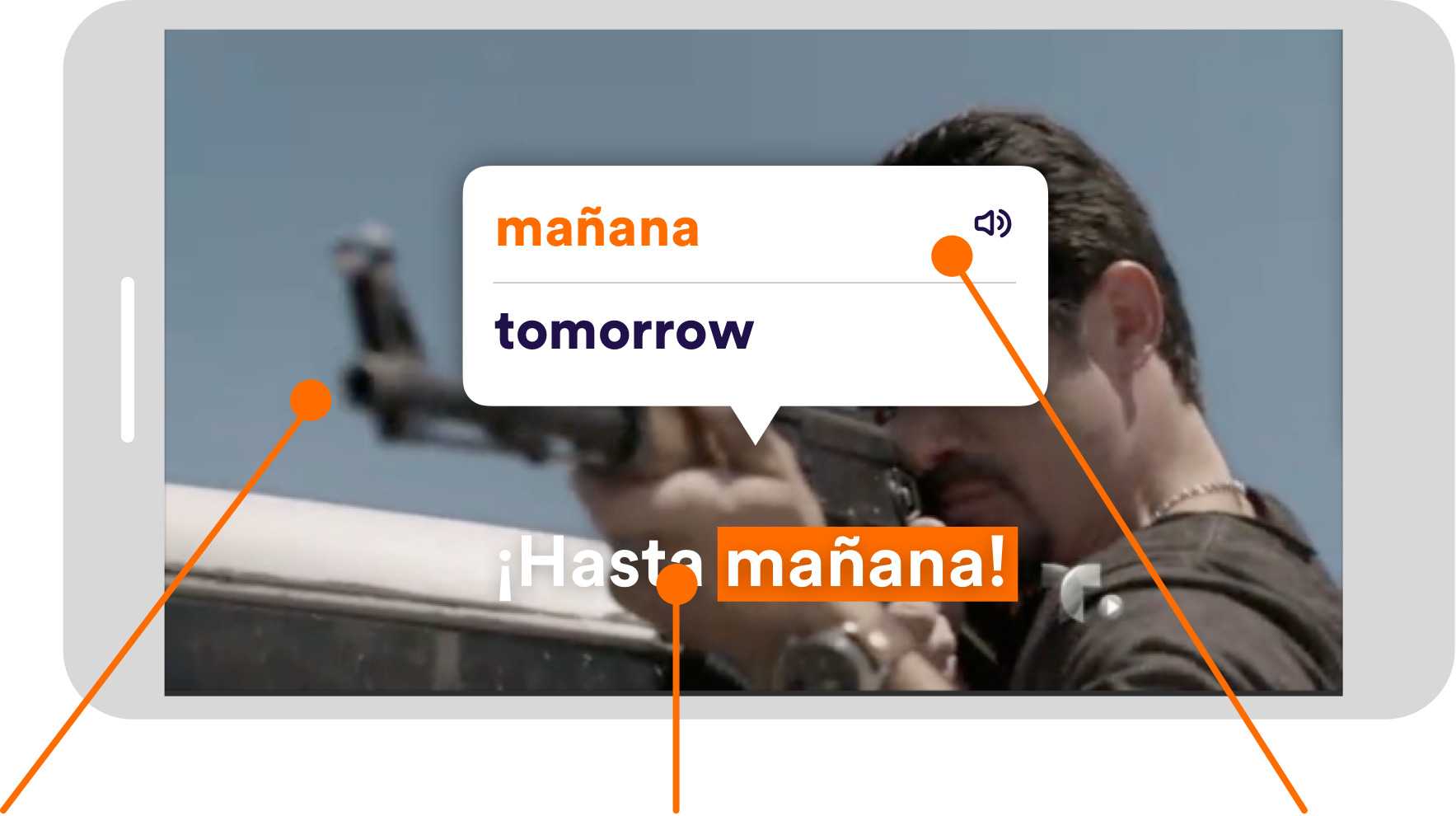
Choose a great Spanish TV show from our extensive catalog of TV Shows. Each Spanish TV show is displayed with Spanish subtitles. Start watching and when you don’t understand something, just click on that word or phrase and get an instant translation. Lingopie saves all your words and phrases so you can review them afterwards with built-in SRS language learning tools. As you binge watch from episode to episode, you’ll quickly notice that you understand more & more in record time. The more you watch, the more you learn. That’s the “Binge Learning Method.”
LingoPie makes learning addictive! Using interactive closed captions and
great foriegn contnent, learning a new language is as fun as watching TV.


and dozens of other great shows!


Enjoy Great Shows
Highly acclaimed
Spanish TV shows

Click & Translate
Interactive, clickable,
same language captions

Learn From Context
Contextual translations,
grammar and sample sentence
Highly acclaimed Spanish TV shows.
Interactive, clickable, same
language captions
Contextual translations, grammar and
sample sentence

Jennifer P.

Beatrice R.

Myra M.

Hiran A.

Jennifer P.
Jan 2nd, 2019
Beatrice R.
Jan 2nd, 2019
Myra M.
Nov 6th, 2018
Hiran A.
Feb 16th, 2019

